Trailer Plates And Landing Leg Supports: Preventing Damage And Improving Yard Safety
Trailer Plates And Landing Leg Supports: Preventing Damage And Improving Yard Safety
If you run a busy yard, you know that small oversights can turn into big costs. Trailer plates and landing leg supports are a simple fix that protects your surface, your trailers, and your team. In this guide, you will learn why these products matter, how they prevent common damage, and how to choose and position them for maximum stability. You will also see how they fit with wider yard and warehouse safety measures.
What are trailer plates used for?
Trailer plates, sometimes called trailer landing leg supports or trailer leg plates, spread the load from the landing legs over a much larger surface area. When a trailer is parked, the landing legs carry a huge share of the trailer weight, especially during loading and unloading. Without a plate, that point load goes straight into your ground surface. On softer tarmac, block paving, and even concrete, this can cause dents, spalls, and cracks. On wet or uneven ground, landing legs can sink or slip.
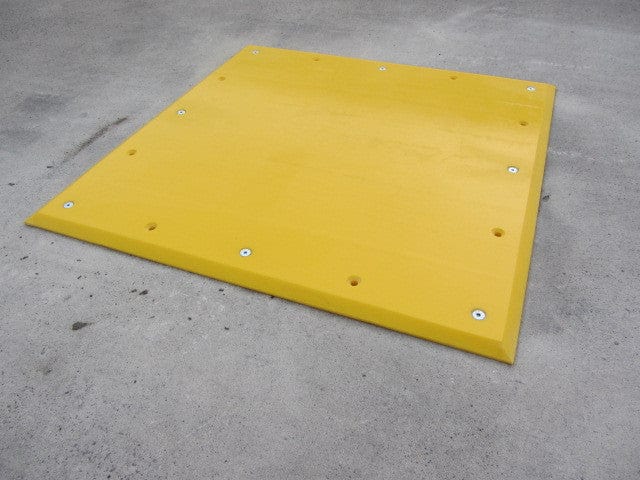
A landing plate solves that. The broad base increases friction and reduces ground pressure, so the legs sit stable and true. Many plates use hard wearing materials such as UHMWPE that resist abrasion and weathering, and some include chamfered edges to reduce trip risk. In short, plates protect both your yard and the trailer’s landing gear in one move.
Why should you use trailer plates and landing leg supports?
- Protect your surface: Tarmac and asphalt deform under concentrated loads. Concrete chips when a steel foot scrapes, twists, or drops. A plate acts as a sacrificial layer that takes the knocks for your yard.
- Prevent landing leg sink and slip: Wider contact area helps on soft, warm, or uneven ground, which is common around temporary bays or older yards.
- Stabilise during loading: Forklift movements and shifting pallets create dynamic loads. A stable footing reduces wobble that could stress the chassis or twist the trailer deck.
- Cut maintenance costs: Bent footplates, damaged pins, and warped landing gear add up to expensive repairs and downtime. Supports reduce those incidents.
- Improve safety: A firm, flat base reduces the chance of a trailer tilt or sudden drop that could harm operators and damage goods.
How to prevent landing gear damage on trailers
Landing gear damage usually comes from point loading, twisting, dragging, or impact. You can reduce these risks with a few simple habits.
- Use a landing plate every time the trailer is dropped: Make it part of the standard unhooking process. Place the plate before lowering the legs, not after.
- Lower legs evenly: Keep the trailer level by lowering both legs in small increments. Uneven legs put torsion through the cross shaft and gearbox.
- Avoid dragging the legs: Never move the trailer with the legs down. Even small shunts can bend feet and rack the gear.
- Check ground conditions: Waterlogged areas, fresh tarmac, or frost can all affect stability. Use a larger plate if the ground is soft or sloped.
- Inspect and clean: Mud and gravel trapped under a leg foot act like sandpaper. Clean the leg feet and plates, and inspect for cracks or loose pins.
- Set clear chocking and coupling rules: A chocked trailer is less likely to nudge forward as you wind the legs. Using a suitable wheel chock supports good practice and reduces strain on the landing gear.
Choosing the right landing plate or support
Not all plates are the same. Consider these points when you select a product.
- Material: UHMWPE is a great all round choice. It is tough, weather resistant, and kind to concrete and tarmac. It also glides slightly under load, which reduces scuff damage to your yard surface.
- Size and thickness: Heavier trailers and softer ground call for larger plates with more thickness. Bigger surface area spreads weight better and reduces sink risk.
- Edge design: Chamfered edges lower trip risk and reduce the chance of a forklift or pallet truck catching the plate.
- Fixing options: Some sites prefer loose plates; others install anchor points or marked positions to keep plates where drivers expect them. Choose what suits your traffic and processes.
- Visibility: Bright colours or reflective strips help teams position plates accurately in low light.
If you are unsure, we are always happy to chat through your requirements and point you to a plate that suits your yard surface and trailer mix.
Best practice for positioning and use
- Mark the drop zone: Paint or stencil where plates should sit. Clear markings help visiting drivers follow your method without guesswork.
- Place before you wind: Set the plate under the expected foot location while the trailer is still on the fifth wheel. Then lower until the leg foot is centred on the plate.
- Keep it flat: Make sure the plate is fully supported by the ground. If the surface is uneven, use a larger plate to bridge dips.
- Secure against wind and traffic: On exposed yards, low profile retainers or simple storage cradles by each bay help prevent plates drifting.
- Train and repeat: Add plate use to your driver induction and your yard SOP. A two minute step saves a lot of grief later.
How plates support broader yard and warehouse safety
Trailer stability sits alongside other controls that keep people and assets safe. For example, chocking every parked trailer helps prevent roll, so your team can work with confidence. Consider pairing plates with:
- Clearly visible safety barriers around pedestrian routes to separate people from moving equipment.
- Protective products that shield fixed assets and structures, such as pallet racking protectors in busy aisles.
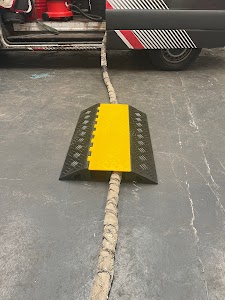
- Cable and hose management across walkways and bays so loading kit does not create trip hazards. A well placed cable protector ramp also protects power and data lines used by dock equipment.
These steps work together. Stable trailers reduce unplanned movements; chocks stop roll; barriers protect pedestrians; and tidy cables keep workflows safe and smooth
A simple checklist for every drop
- Select the right size plate for the trailer and surface.
- Ensure trailer is positioned correctly before lowering landing legs.
- Lower legs evenly until they are fully loaded and stable.
- Chock wheels and confirm the trailer is level before uncoupling.
- Inspect plates weekly and replace if cracked or heavily scored.
Summary: small cost, big impact
Trailer landing leg supports and plates are a small investment that prevents ground damage, stops costly landing gear repairs, and improves safety for your team. When used with good habits and complementary measures, they make your yard more resilient and efficient. If you want help choosing the right products for your site, we are always happy to talk through options and recommend a practical setup that fits your budget
and workload.
Internal note on useful products you might pair with plates: browse a wheel chock for consistent trailer restraint; add safety barriers to define safe zones around bays; and consider a cable protector ramp to keep power and data leads safe where traffic crosses